
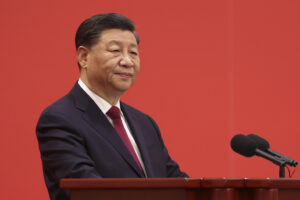

April 2018, Volume 29, Issue 2
China in Xi’s “New Era”: The Return to Personalistic Rule
After Mao, Deng Xiaoping tried to institutionalize collective leadership, but this did not stop Xi Jinping from grasping all the levers of power.
143 Results
April 2018, Volume 29, Issue 2
After Mao, Deng Xiaoping tried to institutionalize collective leadership, but this did not stop Xi Jinping from grasping all the levers of power.

July 2021, Volume 32, Issue 3
Nayib Bukele has developed a blend of political tactics that combines populist appeals and classic autocratic behavior with a polished social-media brand. It poses a dire threat to the country’s democratic institutions.
July 2008, Volume 19, Issue 3
The rise of Islamist parties poses new challenges to efforts to understand the relationship between Islam and democracy. A diverse group of authors investigates this new phenomenon and its implications for the future of democracy in the Middle East.
October 2009, Volume 20, Issue 4
The ANC saw its first-ever decline in vote share in South Africa's 2009 parliamentary elections. Will the ANC heed this warning to mend internal divisions and reconnect with voters?
April 2017, Volume 28, Issue 2
Traditional intermediary institutions such as parties and the legacy media are not what they once were, and they are not coming back. What are the implications of new social media and digital-campaign techniques?
January 2011, Volume 22, Issue 1
The left-right ideological divide has begun to narrow in Latin America as citizens and leaders increasingly choose a pragmatic approach to politics and embrace the rules of the democratic game.
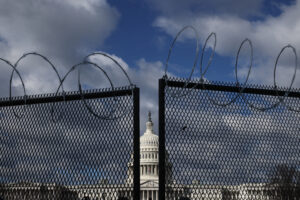
October 2021, Volume 32, Issue 4
In a deeply polarized United States, ordinary people now consume and espouse once-radical ideas and are primed to commit violence.
January 2008, Volume 19, Issue 1
Asia's oldest democracy is sinking into a morass of corruption and scandal. The Philippines' president, Gloria Macapagal-Arroyo, continues to undermine the country's democratic institutions in order to remain in power.
October 2008, Volume 19, Issue 4
Torn between populism and those who fail to respect democratic limits in combating it, Thailand badly needs to locate a middle ground where the best of its old traditions can help it adjust to the new challenges that it faces.
July 2012, Volume 23, Issue 3
The electoral triumph of Islamist parties has dampened the enthusiasm of democrats for the “Arab Spring.”
July 2004, Volume 15, Issue 3
Over the ten years since its first nonracial elections in 1994, South Africa has seen its democratic order become more firmly institutionalized, even as the electoral dominance of the ANC has continued to grow.
October 2016, Volume 27, Issue 4
Liberal democracy in Europe today is under siege from a variety of political forces, but it is critical to recognize the distinctions among them.

October 2021, Volume 32, Issue 4
Turkey’s ruling party has developed a new tool: When its local candidates lose, it dismisses them and appoints its own choice under a guise that maintains the veneer of democracy. It is an autocratic innovation that may soon spread.

January 2021, Volume 32, Issue 1
While analysts of populism have focused on economic woes and “cultural backlash,” a thirst for the restoration of order may better explain the appeal of authoritarian populists in fragile democracies where governance is falling short.

July 2022, Volume 33, Issue 3
The case of Hungary shows how autocrats can rig elections legally, using legislative majorities to change the law and neutralize the opposition at every turn, no matter what strategy they adopt.
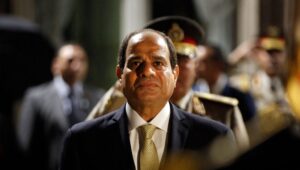
January 2024, Volume 35, Issue 1
Egypt’s general-turned-president has spent lavishly, cemented the military’s political and economic control, and, afraid of suffering Mubarak’s fate, become increasingly repressive. But with crushing inflation and everyday people suffering, is Sisi losing his grip?
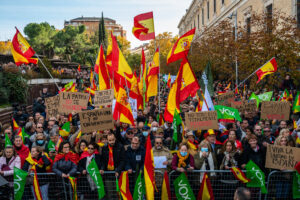
January 2023, Volume 34, Issue 1
When ordinary voters are given a choice between democracy and partisan loyalty, who will put democracy first? Frighteningly, Europe harbors a deep reservoir of authoritarian potential.
July 2023, Volume 34, Issue 3
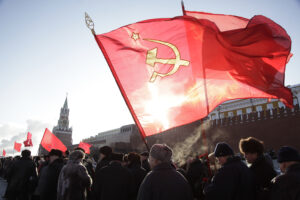
People obsess over where Russia’s democracy went wrong. The truth is it did not fail: Russia’s democratic transition never got off the starting blocks.
January 2008, Volume 19, Issue 1
Senegal's 2000 presidential election marked the end of forty years of one-party rule. But the reign of President Wade has been a severe disappointment, dashing hopes for democratic consolidation. *This is a corrected text of the print and original online version of this essay, portions of which drew heavily on Tarik Dahou and Vincent Foucher's…

January 2017, Volume 28, Issue 1
When parts of the Turkish military attempted a coup in July 2016, the competitive authoritarian AKP regime was able to bring both its competitive and its authoritarian features to bear, stopping the coup and launching a crackdown.