
January 2026, Volume 37, Issue 1
Why Populists Hollow Out Their States
Elected leaders across the globe are intentionally undermining their governments’ ability to govern. How and why do these leaders seek to dismantle the states they lead?
January 2026, Volume 37, Issue 1
Elected leaders across the globe are intentionally undermining their governments’ ability to govern. How and why do these leaders seek to dismantle the states they lead?
January 2026, Volume 37, Issue 1
Ukraine must win its war against Russian aggression. But it is also true that the decisions it makes now will determine what kind of state it will be when the war is over.
January 2026, Volume 37, Issue 1
A revolution in political participation is underway: Political players and advocacy groups are using AI to draft ballot initiatives, gather signatures, and persuade voters—undermining democratic legitimacy in the process.
January 2026, Volume 37, Issue 1
The reelection of Uganda’s octogenarian president Yoweri Museveni may be a foregone conclusion, but the country is wracked with unease. His highly personalized regime is passing, and there is no clear view of what will follow.
How Machado Can Steer Venezuela Toward Democracy | José Ramón Morales-Arilla
Whether the capture of Nicolás Maduro leads to democracy depends on Donald Trump — and María Corina Machado’s ability to make a democratic future the only attractive choice.
Why the United States Shouldn’t Run Venezuela | Juan Miguel Matheus
Nicolás Maduro has been removed, but the dictatorship he led remains. If this period of American tutelage drags too long, it will be a recipe for disaster for Venezuela and the United States.
How Venezuela Actually Becomes a Democracy | José Ramón Morales-Arilla
The South American country may be on the verge of real change. But it isn’t going to descend into civil-war chaos like Libya. It will be difficult, imperfect, and far better than what Venezuelans have had to endure.
News & Updates
January 2026
When a democratically elected president acts undemocratically, how do you hold him accountable? It isn’t easy. Most leaders — even those who attempt to hold power through coups — evade justice.
January 2026
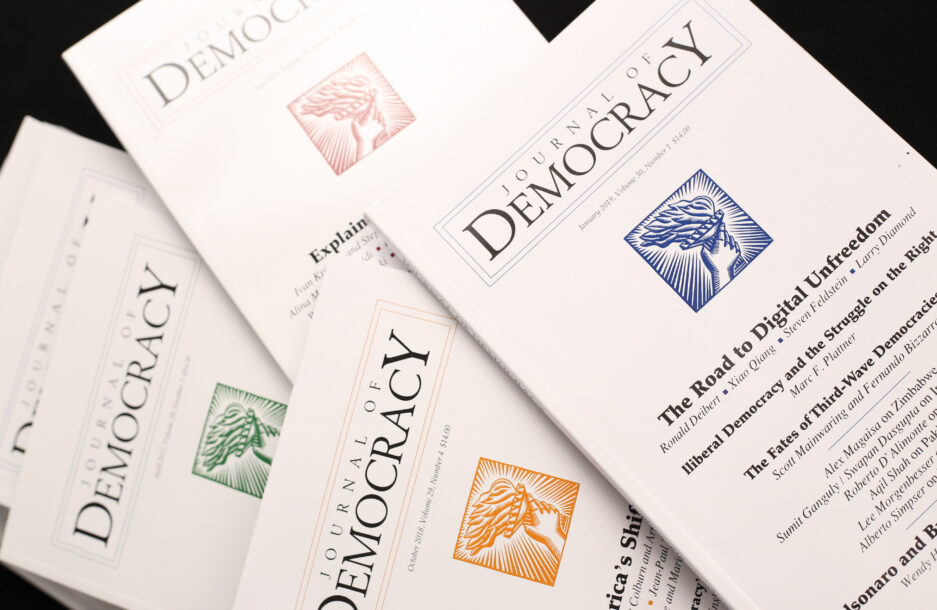
The new issue of the Journal of Democracy is here! Read about Gen-Z uprisings; lessons from Brazil on holding would-be autocrats accountable; how direct-democracy initiatives such as referendums are being undermined by AI; the steps Ukraine must take to remain democratic; and more.
Most Read
Nicolás Maduro brazenly stole Venezuela’s 2024 presidential election, despite a free, fair, and transparent ballot count that showed a clear opposition victory. Why would an autocrat want to maintain one of the world’s best voting systems?
Brazil did something that few democracies achieve: It convicted a former president of attempting a coup. How did the country’s courts hold would-be autocrat Jair Bolsonaro accountable when so many other coup plotters go unpunished?
With illiberal forces ascendant across the globe, protecting individual liberties and the democratic process is crucial. But when institutions empower minority groups over the majority, can democracy survive?
Young people from Peru to Madagascar to Nepal—furious with political elites reaping the spoils of privilege and corruption—are rising up to demand change. But what happens when their movements succeed?
A revolution in political participation is underway: Political players and advocacy groups are using AI to draft ballot initiatives, gather signatures, and persuade voters—undermining democratic legitimacy in the process.
Want curated Journal of Democracy content directly in your inbox each week?
Follow the link below to receive the latest from the Journal of Democracy.
By Javier Corrales and Dorothy Kronick
Nicolás Maduro brazenly stole Venezuela’s 2024 presidential election, despite a free, fair, and transparent ballot count that showed a clear opposition victory. Why would an autocrat want to maintain one of the world’s best voting systems?
Plus the entire January 2025 issue, available free of charge for a limited time.