January 2026, Volume 37, Issue 1
Three Mistakes Ukraine Must Avoid
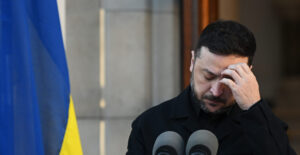
Ukraine must win its war against Russian aggression. But it is also true that the decisions it makes now will determine what kind of state it will be when the war is over.
January 2026, Volume 37, Issue 1
Ukraine must win its war against Russian aggression. But it is also true that the decisions it makes now will determine what kind of state it will be when the war is over.
January 2026, Volume 37, Issue 1
Moldova is poor, strategically located, and under intense pressure from Russia. But one of Europe’s smallest players has come up with a surprisingly effective recipe for holding Russian dominance at bay.
January 2026, Volume 37, Issue 1
Maria Sandu on Russian interference; Ekrem İmamoğlu in solidarity with Europe’s democratic cities; opposition leader Tundu Lissu on inhumane prison conditions; a Malagasy student’s speech to gendarmes; a Nepalese student’s class speech against corruption; and the Hong Kong Alliance’s demand to release two political prisoners.
July 2025, Volume 36, Issue 3
The most challenging type of diversity for democracy is religious diversity. This also helps explain why modern democracy first took root in Western Europe: Religiously homogenous populations went hand in hand with the early formation of parliaments.
October 2024, Volume 35, Issue 4
Democracy’s defenders have failed to appreciate the power of nationalism. They must arm themselves with emotionally compelling narratives to counter illiberal foes of free government. When they do, they are championing a winning message.
October 2024, Volume 35, Issue 4
Immigration threatens to erode liberalism, as far-right parties and migrant communities with illiberal views gain power. Mass publics have shouldered the blame. But should political elites be held responsible?
October 2024, Volume 35, Issue 4
When an epidemic of Koran burnings swept Denmark and Sweden, the Danish government criminalized the practice. It is a misguided response that misses the opportunity to protect both minorities and the right to free speech.
October 2024, Volume 35, Issue 4
The far right celebrated big wins in the 2024 European Union elections, but it has struggled to translate that success into political power. Victory at the ballot box has not made its ideological and organizational divisions any easier to solve.
January 2024, Volume 35, Issue 1
Populism is a mortal threat to liberal democracy, but it rarely hits the mark. The evidence shows that these would-be strongmen require an extraordinary set of circumstances to succeed, which is why they so rarely do.
January 2023, Volume 34, Issue 1
When ordinary voters are given a choice between democracy and partisan loyalty, who will put democracy first? Frighteningly, Europe harbors a deep reservoir of authoritarian potential.
January 2023, Volume 34, Issue 1
After long condemning gay rights, much of Europe’s political right now champions them. They have made welcoming gay voters a sign of modernity and openness—and a tool for stirring opposition to Muslim immigrants.
July 2022, Volume 33, Issue 3
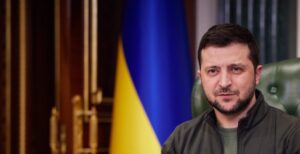
Volodymyr Zelensky is far more than a brave wartime leader. He began changing the tenor and direction of Ukrainian politics long before the people made him their president.
April 2022, Volume 33, Issue 2
Europe appeared ready to turn its back on the pessimistic vision of populists—and then Putin upended the continent. A new book may serve as a textbook for progress, or a signpost of democracy’s dashed hopes.
October 2021, Volume 32, Issue 4
A Europe-wide study shows that those who back the incumbent are more likely to oppose democratic norms. The effect is strongest among those who favor right-wing populists.
January 2021, Volume 32, Issue 1
Political polarization is not always bad for democracy. What is more, a tendency of major parties to converge into some kind of “grand coalition of the center” poses serious risks for a democratic system.
October 2020, Volume 31, Issue 4
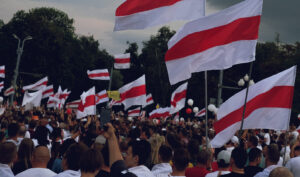
Well-organized demonstrations are rocking the 26-year-old dictatorship of President Alyaksandr Lukashenka. Inside the movement and why it rose when it did.
April 2020, Volume 31, Issue 2
Escaping the populist trap requires reversing the sequence that brings populists to power in the first place. The 2019 triumph of Greece’s liberal New Democracy party shows how victory can be achieved.
April 2020, Volume 31, Issue 2
The 2019 election ended years of turmoil over the United Kingdom’s relationship with the EU, but challenges to national unity and parliamentary sovereignty are only beginning to come to a head.
January 2020, Volume 31, Issue 1
Illiberalism can drive away a country’s young people, and with them the future.
January 2020, Volume 31, Issue 1
Lacking any ideas for shoring up Russian society, Putin has settled on picking a fight with Ukraine.
October 2019, Volume 30, Issue 4
The results of the May 2019 elections to the European Parliament—and particularly the growing influence of the populist radical right—reflect a deep transformation of European politics that can largely be traced to the “refugee crisis” of 2015–16.
October 2019, Volume 30, Issue 4
Beyond the commonly cited economic and cultural anxieties afflicting many Europeans, a key factor enabling the rise of populism across Europe has been the failure of mainstream parties on both the left and the right to offer clear and credible policy alternatives.
October 2019, Volume 30, Issue 4
The gilets jaunes movement erupted suddenly but has now apparently subsided without leaving a significant impact on electoral politics. Yet the tensions that gave rise to the working-class protests remain strong and are reshaping the political landscape of a divided France.
October 2019, Volume 30, Issue 4
A review of Democracy and Dictatorship in Europe: From the Ancien Régime to the Present Day by Sheri Berman.
July 2019, Volume 30, Issue 3
In both Eastern and Western Europe, social-democratic parties have shifted to the center on economic policy, not only sapping the electoral strength of these parties, but also opening up political space for the populist right.
April 2019, Volume 30, Issue 2
Spain’s system of Autonomous Communities had functioned fairly smoothly for decades following the country’s democratic transition, but events in Catalonia are putting it under unprecedented strain.
April 2019, Volume 30, Issue 2
Europe has seen a proliferation of laws governing historical memory, but they sometimes threaten to inflame social tensions and undermine liberal values.
January 2019, Volume 30, Issue 1
In 2018, Italian voters produced Europe’s first populist majority. Lega and the Five Star Movement, each populist in its own way, collectively won just over half the vote. Now they are locked in a struggle with the EU.
April 2018, Volume 29, Issue 2
Across the West, economic, demographic, and cultural shifts have spurred the rise of populists who embrace majoritarianism and popular sovereignty while showing little commitment to constitutionalism and individual liberty.
April 2018, Volume 29, Issue 2
This small Balkan country has been plagued with crises of identity both internal and external. But recent developments, including a democratic change of government via the ballot box, have created an opportunity to find a better path.
July 2017, Volume 28, Issue 3
Analogies with interwar Europe are often misdirected. In the 1920s and 1930s, regime breakdowns occurred in struggling new democracies, but established democratic systems exhibited remarkable endurance.
July 2017, Volume 28, Issue 3
A look at liberal democracy’s complex historical evolution shows that elite fantasies of liberalism without democracy are ill-founded. Authoritarian legacies and democratic deficits lie at the core of trends that threaten liberal rights.
July 2017, Volume 28, Issue 3
Political elites once held referendums to fend off challenges to European integration. More recently, Euroskeptic parties have employed referendums to batter down the walls of elite consensus. But the spread of referendums threatens to undermine the legitimacy of representative democracy.
April 2017, Volume 28, Issue 2
January 2017, Volume 28, Issue 1
The referendum campaign and its aftermath have exposed fault lines between the “two Britains” that have been long in the making and that pose stark questions about national values and identity.
January 2017, Volume 28, Issue 1
Once Europe’s most painful “problem” area, the Balkans have managed to make strides toward stability, democracy, and integration into the West over the last fifteen or so years. But Moscow is becoming increasingly active in the region, and the durability of these gains should not be taken for granted.
October 2016, Volume 27, Issue 4
Liberal democracy in Europe today is under siege from a variety of political forces, but it is critical to recognize the distinctions among them.
October 2016, Volume 27, Issue 4
What some had thought would be the “end of history” has instead turned out to be the “new world disorder.” Democratic liberalism may have no new ideological rival, but older identities are powerfully reasserting themselves.
April 2016, Volume 27, Issue 2
In power since 2002, the Justice and Development Party (AKP) of Recep Tayyip Erdoğan seemed as if it might be losing its hold when Turkish voters went to the polls in June 2015. Yet that “hung election” gave way to another contest in November, and the AKP came roaring back.
July 2015, Volume 26, Issue 3
A few years ago, Europe’s most important intergovernmental human-rights institution, the Council of Europe, crossed over to the dark side. Like Dorian Gray, the dandy in Oscar Wilde’s story of moral decay, it sold its soul. And as with Dorian Gray, who retained his good looks, the inner decay of the Council of Europe remains hidden from view.
January 2014, Volume 25, Issue 1
Beset by economic and political crises, democracy in southern Europe has been eroding, along with support for the EU. These developments stem largely from the design of the euro, which denies key economic-policy tools to national governments.
April 2013, Volume 24, Issue 2
Should Brussels intervene to protect democracy within EU member states? Does Europe have the tools it would need to do so effectively? Recent developments in Hungary and Romania show the importance of addressing these questions sooner rather than later.
October 2012, Volume 23, Issue 4
The irony at the heart of Europe’s current crisis is that although the EU originated as part of a post-1945 effort to consolidate democracy in Western Europe, the Union’s travails are now pushing the continent in the opposite direction instead.
October 2012, Volume 23, Issue 4
The EU is experiencing a somewhat paradoxical phenomenon: On the one hand, it has been a tremendously successful club, promoting democracy and open societies within its borders and in its neighborhoods. On the other hand, the language of national rivalry and of class struggle is re-entering public discourse, especially within the eurozone.
October 2012, Volume 23, Issue 4
Contrary to the expectations of some democratic theorists, the EU will not collapse because of the “democratic deficit” of European institutions. Nor will it be saved by the democratic mobilization of civil society. Paradoxically, it is widespread disillusionment with democracy—the shared belief that national governments are powerless in the face of global markets—that may be…
October 2012, Volume 23, Issue 4
Confidence in all European institutions is at a record low. What explains this lack of trust, and how can it be restored? To begin with, the eurozone needs a workable long-term solution, and the EU as a whole must come to terms with the reality of a two-speed integration process.
October 2012, Volume 23, Issue 4
The present crisis of the Euro is a near perfect example of how causal complexity, unanticipated consequences, and decisional uncertainty can have a significant and cumulative impact on regional integration. In theory, this should be the crisis that will drive the EU from economic to political integration. In practice, the outcome—at least, so far—has been…
October 2012, Volume 23, Issue 4
There is a lively public debate in Europe over how to deal with the current crisis. Among the obstacles to overcome, economic diversity, populism, and the distribution of costs figure prominently. Although most now agree on what needs to be done, whether it will be politically feasible remains uncertain.
October 2012, Volume 23, Issue 4
Europe’s economic crisis has become a crisis of democratic governance that could roll back five decades of integration. The EU may disintegrate because its “commanders” are unable to converge three distinct economic, political and institutional theaters in which the crisis is being played out.
April 2009, Volume 20, Issue 2
The North Atlantic Treaty Organization played a key role in safeguarding Western democracy during the Cold War. With that conflict over, NATO must continually adapt and evolve in a fast-changing world.
January 2008, Volume 19, Issue 1
The history of twentieth-century European communist parties shows that extremists can be moderated by robust democratic institutions. Without them, however, the inclusion of extremist parties may undermine democracy.
October 2007, Volume 18, Issue 4
The countries of Central and Eastern Europe successfully transitioned to democracy. Do their ongoing political problems exist today because of or in spite of the European Union?
April 2007, Volume 18, Issue 2
Tiny Montenegro gained its independence in a referendum in May 2006. What forces lay behind its completely peaceful break from its much larger neighbor, Serbia?
October 2004, Volume 15, Issue 4
Slobodan Milošević fell in the fall of 2000 after he tried to pervert national election results. He had tampered with elections before and survived. What made 2000 different, and what are the lessons to be learned from it?
January 2004, Volume 15, Issue 1
The Editors’ introduction to “Europe Moves Eastward.”
January 2004, Volume 15, Issue 1
As it prepares to go from 15 to 25 member states, the EU has improved the prospects for democracy in the East, but nothing about enlargement promises to resolve the vexing issue of democracy within the EU structure itself.
January 2004, Volume 15, Issue 1
Since the fall of the Berlin Wall, the involvement of NATO and the EU with their prospective new members has worked strongly in favor of democratic governance in Central and Eastern Europe.
January 2004, Volume 15, Issue 1
By expanding itself eastward, the EU has not so much settled the questions surrounding the “borders” of Europe as it has displaced them, changing their focus to take in new areas and new issues.
January 2004, Volume 15, Issue 1
One of the most important events in post-Cold War international affairs, NATO enlargement is even more of a democratic milestone for the countries of Eastern Europe than is the expansion of the EU.
January 2004, Volume 15, Issue 1
The fall of the Berlin Wall gave East Europeans a euphoric sense that they were about to give European democacy a new direction. But as many of their countries prepare to join the EU, little has worked out as expected in those heady days.
July 2003, Volume 14, Issue 3
Like liberals in the British East India Company more than a century ago, European and international officials have become stewards of a people's fate. The intentions are good, but will self-government result?
April 2001, Volume 12, Issue 2
In postindustrial societies, class is less important as a source of party cleavage. With the European left embracing a market-friendly “third way,” political divisions in Europe are increasingly resembling those in the United States.
January 2001, Volume 12, Issue 1
Citizens of postcommunist countries not only want to be free to say what they think and to vote their conscience; they also want a government that obeys the rules it lays down and is not steeped in corruption.
April 2000, Volume 11, Issue 2
A quarter-century after the classic study The Crisis of Democracy was published, three distinguished political scientists find that, though the “crisis” may have disappeared, public confidence is on the decline in almost all the world’s advanced democracies.
April 2000, Volume 11, Issue 2
With Austria’s and Switzerland’s leading political parties having “rigged the political marketplace” by forming Grand Coalitions, voters have turned to the radical right as the only available alternative.
January 1999, Volume 10, Issue 1
Read the full essay here.
January 1996, Volume 7, Issue 1
The Editors’ introduction to “Civil Society After Communism.”
January 1996, Volume 7, Issue 1
Read the full essay here.
January 1996, Volume 7, Issue 1
Read the full essay here.
July 1995, Volume 6, Issue 3
The Editors’ introduction to “The Western Allies 50 Years Later.”
July 1995, Volume 6, Issue 3
Read the full essay here.
July 1995, Volume 6, Issue 3
Read the full essay here.
January 1995, Volume 6, Issue 1
A review of Making Democracy Work: Civic Traditions in Modern Italy, by Robert D. Putnam, with Robert Leonardi and Raffaella Y. Nanetti.
July 1994, Volume 5, Issue 3
Read the full essay here.
January 1994, Volume 5, Issue 1
Read the full essay here.
January 1994, Volume 5, Issue 1
Read the full essay here.
January 1994, Volume 5, Issue 1
Read the full essay here.
January 1994, Volume 5, Issue 1
Read the full essay here.
January 1994, Volume 5, Issue 1
A review of Elites and Democratic Consolidation in Latin America and Southern Europe, edited by John Higley and Richard Gunther.
October 1993, Volume 4, Issue 4
Read the full essay here.