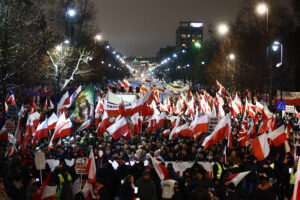
Why the German Far Right Is Beginning to Win
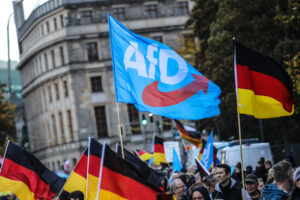
For years, they were a fringe vote. Now they are broadening their agenda, tapping into voter frustration, and getting Germans to favor them once again.
1544 Results
For years, they were a fringe vote. Now they are broadening their agenda, tapping into voter frustration, and getting Germans to favor them once again.
January 2021, Volume 32, Issue 1
While analysts of populism have focused on economic woes and “cultural backlash,” a thirst for the restoration of order may better explain the appeal of authoritarian populists in fragile democracies where governance is falling short.
January 2022, Volume 33, Issue 1
Whether democracy regains its footing will depend on how democratic leaders and citizens respond to emboldened authoritarians and the fissures within their own societies.
The Hungarian leader appears to be working overtime at fraying the country’s ties with even its longstanding friends and allies — and the strain is beginning to show.
January 2024, Volume 35, Issue 1
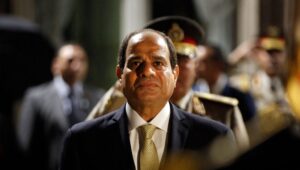
Egypt’s general-turned-president has spent lavishly, cemented the military’s political and economic control, and, afraid of suffering Mubarak’s fate, become increasingly repressive. But with crushing inflation and everyday people suffering, is Sisi losing his grip?
October 2018, Volume 29, Issue 4
Taking advantage of broad global respect for regionalism, authoritarian regimes are using their own regional organizations to bolster fellow autocracies. These groupings offer a mechanism for lending legitimacy, redistributing resources, and insulating members from democratic influences.
Six new podcast episodes featuring JoD authors discussing their essays with political scientists, historians, and journalists. Listen, read, and learn!
January 2015, Volume 26, Issue 1
A review of An Uncanny Era: Conversations Between Václav Havel and Adam Michnik, translated and edited by Elzbieta Matynia.
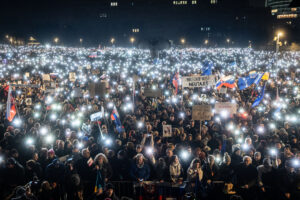
The people have taken to the streets to demonstrate against corruption and Prime Minister Robert Fico’s pro-Moscow policies. Once again, Slovaks see their future in Europe, not Russia.
October 2020, Volume 31, Issue 4
Through greater savvy engagement with international law, authoritarians are seeking not only to shield themselves from criticism, but to reshape global norms in their favor.
April 2023, Volume 34, Issue 2
Although Saddam fell twenty years ago, the politicians who have come after him still think like Baathists. But a new generation has begun making itself heard. It believes in Iraq as a nation and it understands democracy as more than a source of spoils to be divided among groups.
Later this month the country will be holding an absolutely pivotal election. The stakes? Whether Georgia will remain anchored to the West or become Vladimir Putin’s newest satellite state.
This is the darkest moment for freedom in half a century. Whether democracy regains its footing will depend on how democratic leaders and citizens respond to emboldened authoritarians and the fissures within their own societies.
October 2024, Volume 35, Issue 4
Democracy’s defenders have failed to appreciate the power of nationalism. They must arm themselves with emotionally compelling narratives to counter illiberal foes of free government. When they do, they are championing a winning message.
July 2002, Volume 13, Issue 3
Reports on elections in Algeria, Bahamas, Burkina Faso, Chad, Colombia, the Comoros, Congo-Brazzaville, Costa Rica, Dominican Republic, East Timor, Hungary, Lesotho, Madagascar, Mali, São Tomé and Príncipe, Sierra Leone, Ukraine, Vanuatu, and Zimbabwe.
July 2023, Volume 34, Issue 3
People obsess over where Russia’s democracy went wrong. The truth is it did not fail: Russia’s democratic transition never got off the starting blocks.
April 2004, Volume 15, Issue 2
Reports on elections in Georgia, Guatemala, Guinea, Iran, Russia, and Serbia.
New works on China, Russia, political philosophy, English history, and much more graced our shelves this year. Here are the JoD staff’s favorite books of the year.