
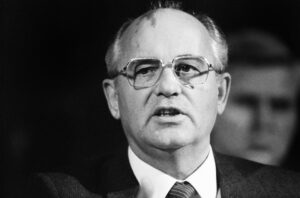
The Man Who Dared to Change the World
Mikhail Gorbachev risked everything. Neither Russia nor the West could live up to his vision. | By Lilia Shevtsova
1492 Results
Mikhail Gorbachev risked everything. Neither Russia nor the West could live up to his vision. | By Lilia Shevtsova
July 2004, Volume 15, Issue 3
Excerpts from: the Alexandria Declaration, a document emanating from a March 2004 conference on Arab reform convened under the auspices of Egyptian president Hosni Mubarak; an initiative on political reform issued by the first Arab Civil Forum on March 22; the Tunis Declaration, issued at the end of the Arab Summit; a response from 34…
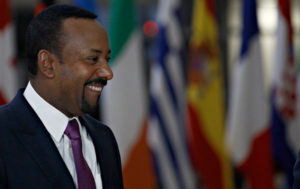

July 2019, Volume 30, Issue 3
Popular dissatisfaction and tensions within the long-ruling EPRDF have led to the rise of a young reformist leader who has begun a course of bold reversals in favor of greater freedom and openness.
April 2011, Volume 22, Issue 2
The past decade began at a high point for freedom but ended with freedom in peril. Yet the setbacks of the last five years do not outweigh the democratic gains of the last forty.
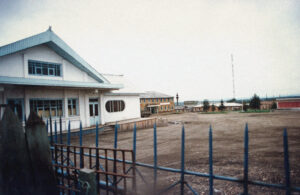
April 2013, Volume 24, Issue 2
Evidence of the evil perpetrated in North Korea’s prison camps continues to emerge, as most vividly highlighted by Blaine Harden’s Escape from Camp 14: One Man’s Remarkable Odyssey from North Korea to Freedom in the West.
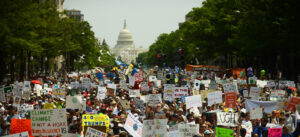
April 2024, Volume 35, Issue 2
The problem for democracy today is not capitalism; it is a decline in public honesty and civility. But there is an opportunity to revive our sense of national community, if we seize it.
April 2017, Volume 28, Issue 2
Excerpts from: U.S. president Donald J. Trump’s inaugural address; remarks by U.S. vice-president Mike Pence and U.S. senator John McCain at the Munich Security Conference; speeches by Colombian president Juan Manuel Santos, Romanian president Klaus Iohannis, and the Gambia’s new president Adama Barrow; and NED president Carl Gershman’s remarks before the Lithuanian parliament.
July 2020, Volume 31, Issue 3
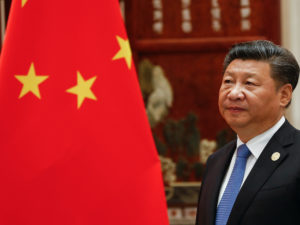
President Xi Jinping and the Chinese Communist Party are taking advantage of the coronavirus pandemic to seize new ground and promote China’s global influence. But their assertive, strong-arm tactics are born from fear and restless insecurity.
October 2018, Volume 29, Issue 4
A review of Tunisia: An Arab Anomaly by Safwan M. Masri.
January 2018, Volume 29, Issue 1
Despite high hopes for progress toward democracy, the military’s power remains stubbornly entrenched, while Aung San Suu Kyi seems to lack the skills to run the government effectively.
January 2019, Volume 30, Issue 1
Not so long ago, the internet was being lauded as a force for greater freedom and democracy. With the rise of intrusive and addictive social media, however, a discomfiting reality has set in.

October 2025, Volume 36, Issue 4
Today, governments can see who buys what, who pays whom, and who donates to which cause. But they cannot easily trace or confiscate Bitcoin. The digital currency offers a lifeline to democratic movements operating in the most repressive places.

The popular Chinese-owned app is helping Beijing collect people’s data everywhere, and giving it control over powerful tools that can shape their worldview. | Aynne Kokas
July 2023, Volume 34, Issue 3
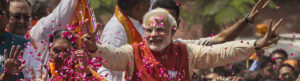
To say that Indian democracy is backsliding misunderstands the country’s history and the challenges it faces: A certain authoritarianism is embedded in India’s constitution and political structures.
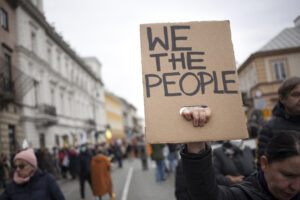
We have long assumed democracy and liberalism went hand in hand. But in truth there have always been tensions between them, and the rise of illiberal democracy cannot be ignored.
April 2001, Volume 12, Issue 2
Excerpts from: South Korean president Kim Dae Jung’s speech accepting the 2000 Nobel Prize for Peace; the inaugural address of Ghanian president John Kufor; Philippine president Gloria Macapagal-Arroyo’s inaugural address; the “National Action Charter for the State of Bahrain”; the “Appeal for Democracy” issued on behalf of the Unified Buddhist Church of Vietnam.
Fall 1990, Volume 1, Issue 4
The complete text of the “Freedom Charter,” the basic statement of principles of the anti-apartheid African National Congress party of South Africa.